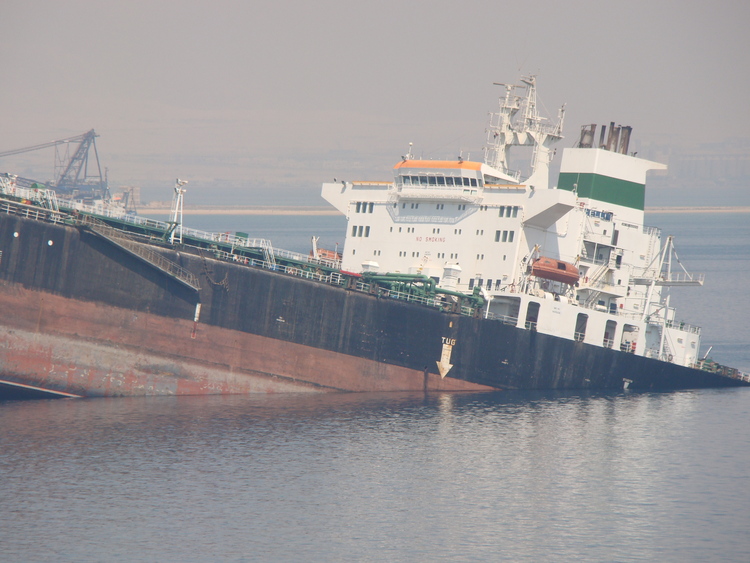
You would think that in large bodies of water like the Gulf of America or Lake Houston, two boats colliding would be almost impossible. It does happen, though, especially near docks or when a large body of water narrows into a smaller channel. While the rules of the sea differ from the rules of the road, determining fault still hinges on proving liability.
Were you in a vessel collision at sea, on a lake, or other navigable waters? If you didn’t cause the crash, you may have grounds to file a suit for compensation against the at-fault party, such as the other boat’s owner, lessee, or operator.
A Houston maritime injury lawyer can help you understand your legal options and build a case to determine the at-fault party’s extent of liability.
Determining liability in a maritime collision
Liability in cases of maritime injuries is governed by a series of complex statutes. Your maritime collision attorney may use a combination of the U.S. Coast Pilot,Navigation Rules, and, if applicable, Texas liability laws. These help establish whether one vessel was liable for the harm and property damage.
One of the first steps an attorney often takes is to investigate the incident to determine exactly where the vessels were at the time of the collision. This often determines which laws cover liability.
The next step is determining if the other vessel was compliant with Navigation Rules and proving that you were in compliance. If the other vessel was violating Navigation Rules, then they could be liable for any harm that negligence causes. Any party found to have violated one or more Navigation Rules will be assigned a portion of the responsibility for the collision of vessels.
Another consideration for your compensatory damages claim is whether the Navigation Rule(s) that the at-fault party violated was created to prevent collisions. If the other party violated a rule designed to prevent vessel collisions, they will almost certainly be found responsible for the collision. Therefore, they’re also liable for the harm the victims(s) suffered.
The U.S. Coast Pilot isn’t a set of liability laws, but it is critical to proving liability in a vessel collision at sea. A judge (and possibly the other party’s insurance company) may use your knowledge of and adherence to the U.S. Coast Pilot to determine whether you knew where you were and what actions you needed to guide your vessel through the waters.
On the other hand, if your attorney can prove that the vessel captain, pilot, or person responsible for steering the vessel didn’t have the right charts for the area, that could contribute to their negligence.
Proving negligence without Navigation Rule violations
Establishing negligence in vessel collisions doesn’t always have to rest on Navigation Rule violations. Just as in car collisions, negligence can occur if a pilot, vessel owner, or other party fails to take appropriate steps to ensure the safety of vessel passengers.
For example, a vessel operator may lease a boat from the owner and then engage in reckless or negligent actions on their own. Perhaps they were speeding, creating wakes, or under the influence of alcohol or drugs.
Or, perhaps the boat owner failed to keep it in proper repair, and the lessee got into a collision due to a malfunctioning vessel.
Comparative fault and vessel collisions at sea
In some situations, one vessel is completely at fault for the collision. In these situations, the plaintiff may recover full compensation for all their damages, including vessel repair or replacement and any injuries they suffered.
However, in most cases, both vessels share some of the responsibility for the collision. A judge will assign a percentage of fault to each.
As long as the other vessel is more than 50% responsible for the crash, you may pursue compensation. However, what you ultimately recover is reduced by your percentage of fault. For example, if your total damages are $100,000, but a judge determines that you contributed 20% of the blame for the incident, then your award will be reduced by 20% to $80,000.
Contact our experienced Houston maritime injury lawyers
If you’ve been involved in a vessel collision at sea, the attorneys at Havens & Associates can help you. We handle a wide range of maritime injury claims, including recovering compensation after a vessel collision.
We offer a free consultation, which you can schedule online or by calling our firm at (713) 955-2215.